Ingo Eichhorst
High Speed Open Source: Ich wollte nur ein kleines Tool bauen, jetzt leite ich eine Softwarefabrik · How coding agents can be directed, controlled and sustained in fast-paced open-source work.

A look back at themes, questions and perspectives from the Berlin Expert Days 2026 programme.
This selection shows programme items from AI & Agentic Engineering and software architecture. It complements the full schedule without ranking other sessions.
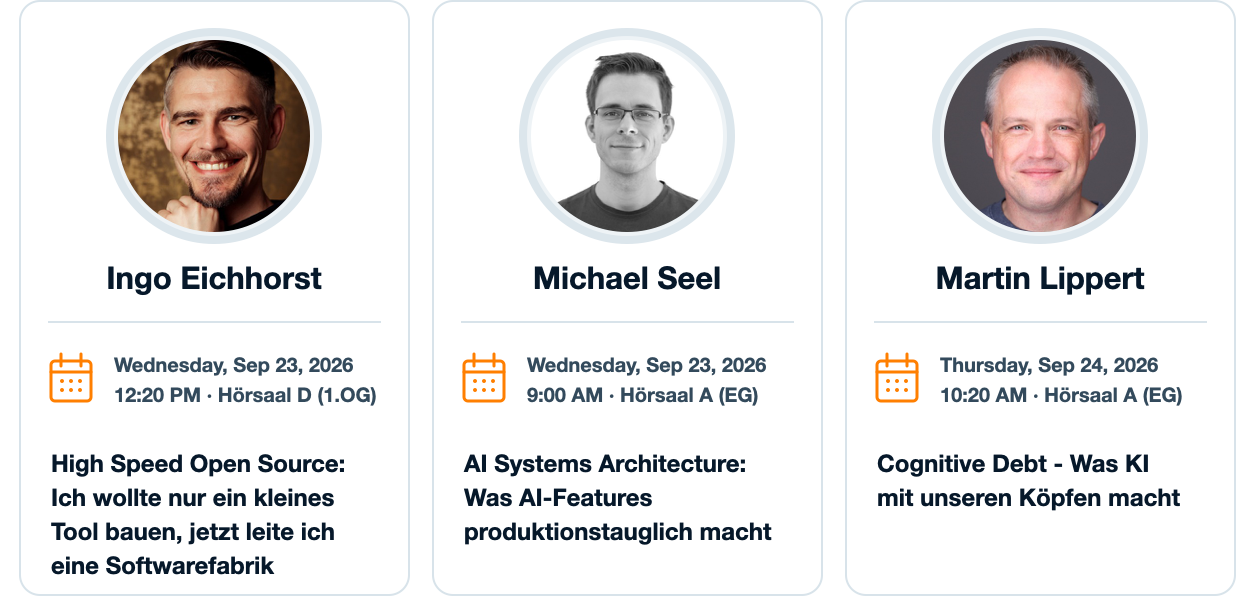
These three sessions made one point clear: productive use of AI needs more than a convincing model. It calls for robust system boundaries, traceable quality, human control and a conscious approach to its effects on our work.
High Speed Open Source: Ich wollte nur ein kleines Tool bauen, jetzt leite ich eine Softwarefabrik · How coding agents can be directed, controlled and sustained in fast-paced open-source work.
AI Systems Architecture: What makes AI features production-ready through clear interfaces, evaluation, policies and observability.
Cognitive Debt – Was KI mit unseren Köpfen macht · What happens when we delegate programming work to AI, and how to retain our ability to review it.
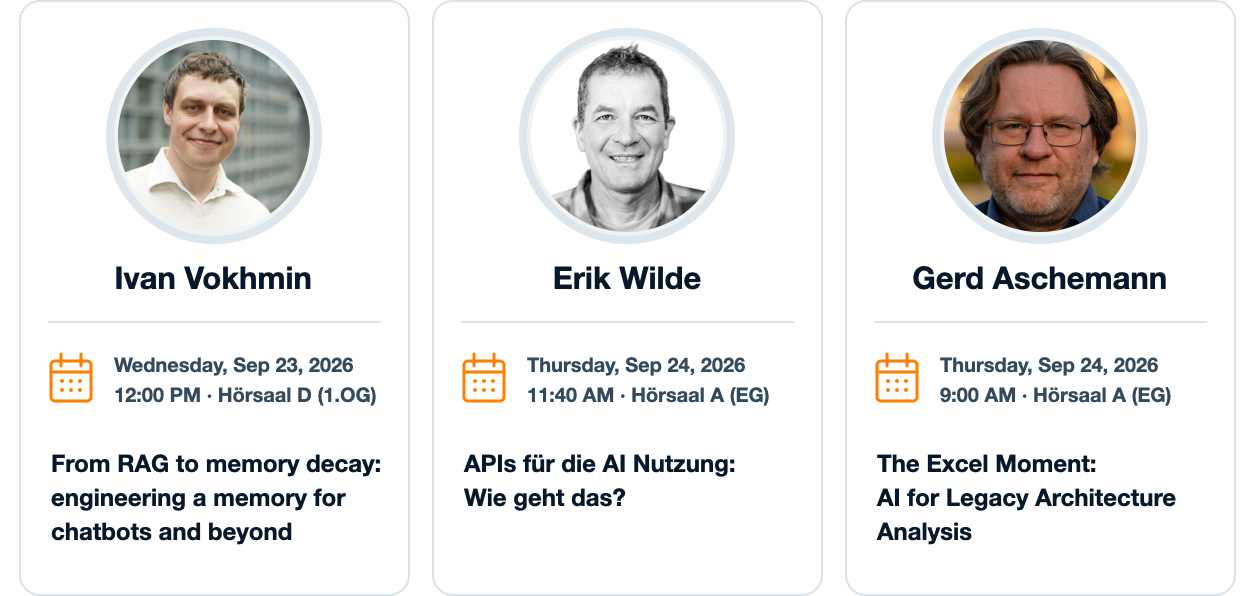
From a chatbot’s memory to the analysis of long-lived system landscapes: these perspectives focused on context, sources and tools that turn information into reliable insight.
From RAG to memory decay: Techniques such as reranking and controlled forgetting for helpful, fast AI contexts.
The Excel Moment: AI for Legacy Architecture Analysis · How LLM-based tools bring together code, tickets and documentation to analyse legacy systems.
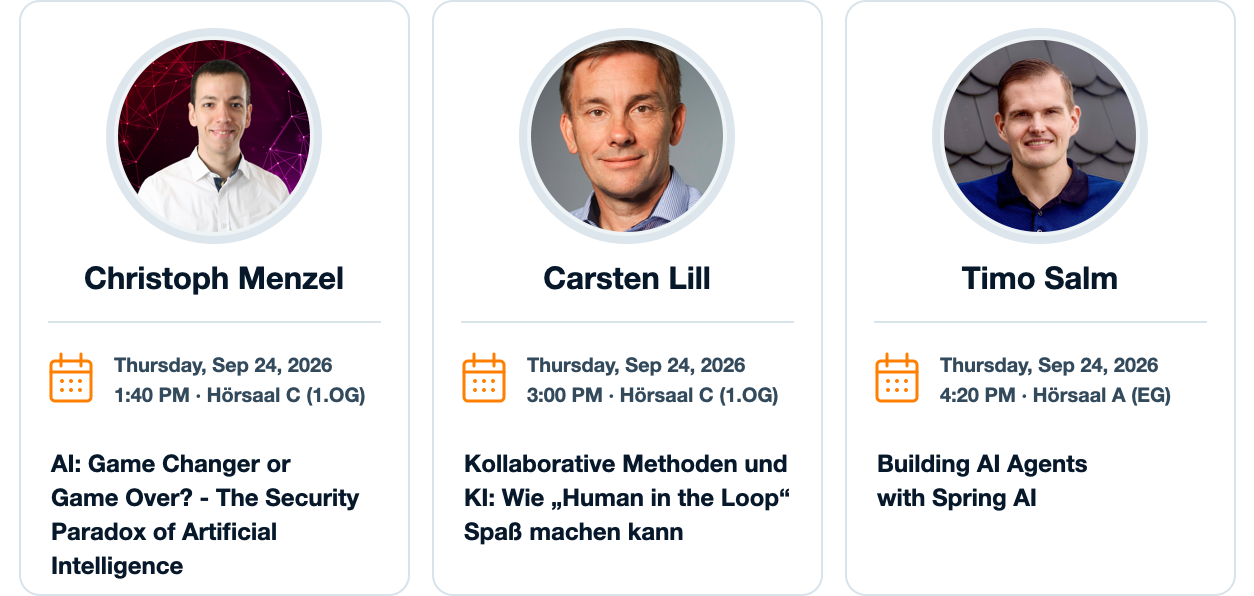
Agentic systems change technical possibilities and responsibilities at the same time. These sessions connected Spring AI, secure systems and collaborative methods with the question of where human expertise remains indispensable.
AI: Game Changer or Game Over? - The Security Paradox of Artificial Intelligence · The opportunities for AI in security and the new attack surface of autonomous systems.
Kollaborative Methoden und KI: Wie „Human in the Loop“ Spaß machen kann · How teams can use collaborative modelling and AI without relinquishing control of their decisions.
Building AI Agents with Spring AI · From tool calls and orchestration to reusable AI skills on the JVM.
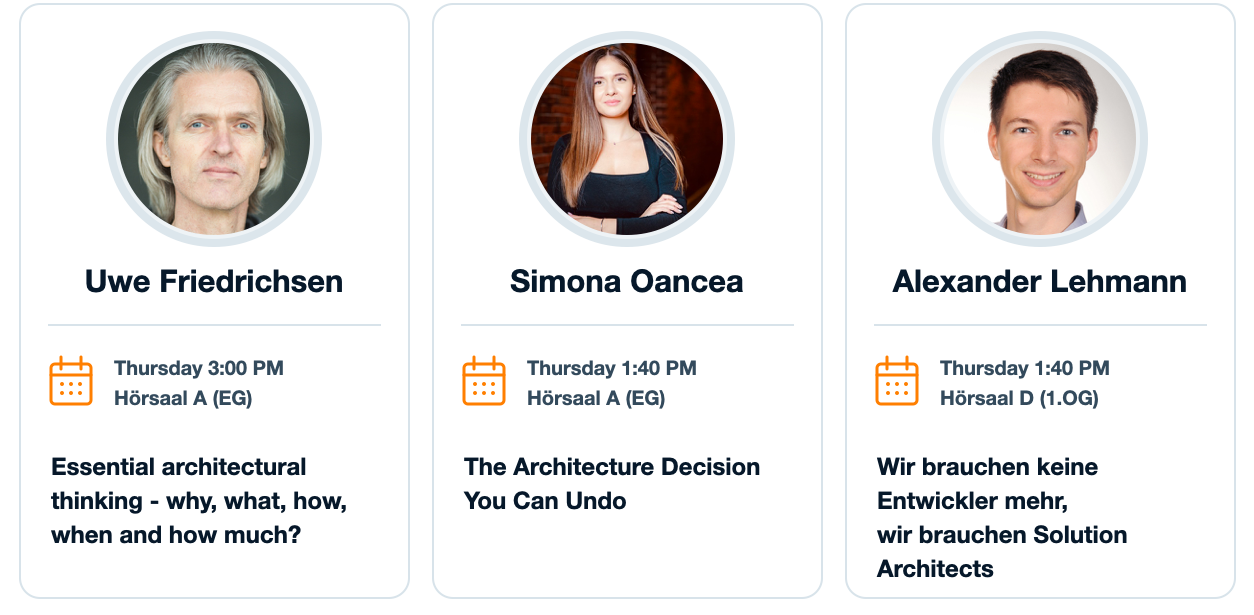
AI does not make architectural questions smaller: it shifts the focus to clarity, system understanding and the development of skills. Two sessions explored these questions from first principles to future professional roles.
Essential architectural thinking - why, what, how, when and how much? · What architectural work does, when it is needed and how AI can support it.
Wir brauchen keine Entwickler mehr, wir brauchen Solution Architects · Why problem analysis, system structuring and architectural skills gain importance in the age of generative AI.
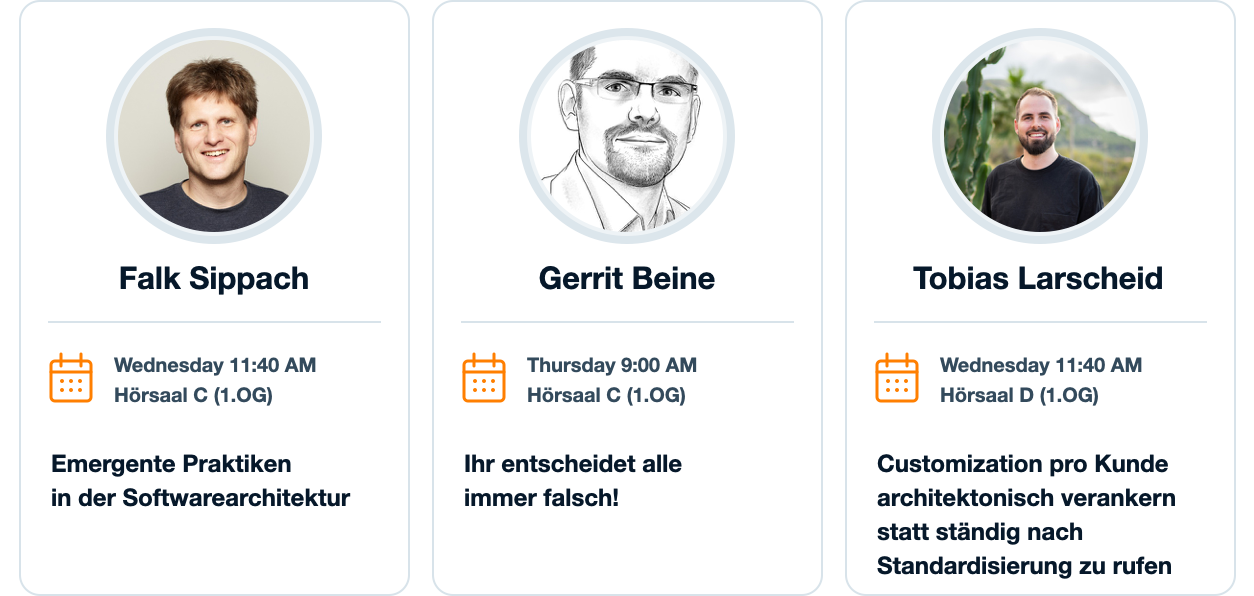
Architecture does not emerge only in documents. These sessions explored decisions, evolutionary practices and a productive approach to customer-specific requirements – close to teams’ daily work.
Emergente Praktiken in der Softwarearchitektur · How ADRs, fitness functions and collaborative methods provide direction without rigidly prescribing architecture.
Ihr entscheidet alle immer falsch! · A different view of architectural decisions, cognitive biases and the tools for them.
Customization pro Kunde architektonisch verankern statt ständig nach Standardisierung zu rufen · How product architecture can support individual requirements for many customers with reasonable effort.